
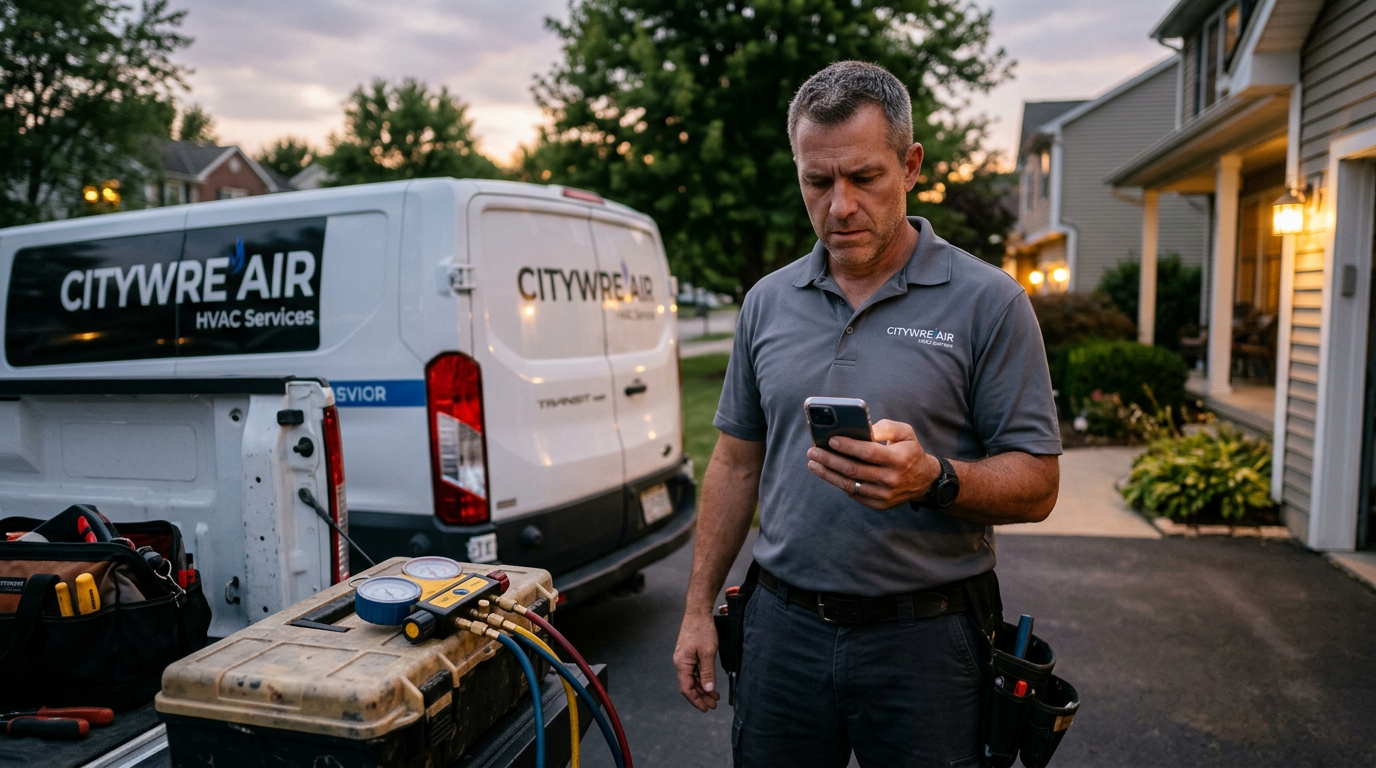
Every HVAC company loses jobs after hours. Not because they lack the technicians, but because no one picked up the phone. An HVAC answering service exists to solve exactly that problem. When a homeowner's heat goes out at 11 PM, they call the first company that answers. If that's not you, it's your competitor. And once they book someone else, they rarely come back.
This isn't a volume problem. It's a coverage problem. And it's one that costs real money every single week.
Who This Is For (and Who It Is Not)
This article is written for HVAC business owners and operations managers who are already getting calls but losing some of them, especially after hours, on weekends, or during peak season surges.
It's for companies running one to twenty technicians who can't justify a full-time receptionist but can't afford to keep losing emergency calls either.
This is not for someone just starting out with zero call volume. If your phone isn't ringing yet, the problem is marketing, not answering. But if calls are coming in and you're missing them, read on.
The Real Cost of a Missed HVAC Emergency Call
An emergency HVAC job averages anywhere from $200 to $800 depending on the repair. A new system installation runs $4,000 to $12,000. When you miss that call, you're not just losing one job. You're handing that customer, and likely their referrals, to whoever did answer.
Most HVAC owners underestimate how often this happens. Calls go unanswered during lunch, during active jobs, during commutes, and especially between 5 PM and 8 AM. That window represents a significant share of emergency volume, particularly in summer and winter when HVAC systems actually fail.
Track your missed calls for one week. The number will almost certainly surprise you.
Why HVAC After Hours Answering Is So Hard to Get Right
The after hours answering service problem is more complicated for HVAC than most service businesses. Here's why.
- Emergency calls require real triage: is this an urgent safety issue or a comfort complaint?
- Dispatching after hours means contacting on-call techs, which requires knowing your schedule and team preferences.
- Customers in distress need a calm, competent voice, not a confused script-reader who doesn't know an air handler from a condenser.
- Your pricing, service area, and availability change seasonally, sometimes weekly.
- Generic call centers don't know any of this. They read from a script and create more friction than they solve.
This is why the standard solutions keep falling short.
Why Common HVAC Phone Answering Approaches Fall Short
Most HVAC companies try one of three things when calls start slipping through: voicemail, a shared receptionist, or a generic hvac call center service.
Voicemail loses the emergency caller immediately. They don't leave messages. They call the next number on the list.
A shared receptionist helps during business hours but goes home at 5. That's when the real problem starts.
Generic call centers can answer the phone, but they can't qualify the call, assess urgency, or speak your language. Customers sense the disconnect and trust drops before the conversation ends.
What you actually need is something that sounds like your business, knows your services, and can handle the call from first ring through booked appointment, at any hour.
What a Real HVAC Answering Service Actually Does
A proper answering service for hvac company operations isn't just a live person reading from a card. It's a system built around your specific business: your service area, your pricing tiers, your emergency protocols, and your dispatch process.
Here's what it should cover:
- Answer every inbound call within seconds, day or night
- Identify whether the call is an emergency, a new service request, or an existing customer follow-up
- Collect the right intake information without making the caller repeat themselves
- Book appointments directly into your scheduling system
- Route urgent calls to your on-call tech based on pre-set criteria
- Confirm the appointment and send reminders automatically
That's what a well-built hvac virtual receptionist handles. It's not a person pretending to know your business. It's a system that actually does.
Inbound Coverage and Outbound Follow-Up Working Together
Answering the phone is only half the equation. The other half is following up on the calls and leads that didn't convert the first time.
On the inbound side, a strong hvac call answering service ensures that every call is answered, every caller is triaged, and every appointment opportunity is captured. This includes after-hours emergencies, weekend inquiries, and peak-season overflow when your office line is ringing faster than your team can respond.
Tempo AI's inbound handling is built specifically for this. Calls are answered within seconds, not minutes. The agent speaks naturally, gathers intake information, and books the job without the customer ever sensing they're not talking to someone on your payroll.
On the outbound side, not every call converts on the first contact. Maybe the customer asked for a quote and didn't call back. Maybe they filled out a form on your website but never booked. Those are warm leads going cold.
Automated follow-up through outbound automation reaches back out to those leads via call, SMS, or email within a defined window. No manual effort from your team. No leads falling through the cracks. Just consistent, timely re-engagement that turns hesitant prospects into booked jobs.
Together, these two systems cover the full call lifecycle from first ring to confirmed appointment.
The Best HVAC Answering Service Setup: A Practical Checklist
If you're evaluating your current setup or shopping for something better, use this as your benchmark. The best hvac answering service for your business should check every one of these boxes.
- Answers calls 24/7, including weekends and holidays
- Handles emergency triage with a defined escalation path
- Books appointments directly into your calendar system
- Collects consistent intake data on every call
- Sounds like your brand, not a generic script
- Follows up automatically on unconverted leads
- Integrates with your CRM or scheduling software
- Can be updated quickly when your services, pricing, or coverage area changes
- Gives you reporting so you can see call volume, booking rates, and missed call data
If your current solution doesn't hit most of these, you're leaving jobs on the table every week.
How Fast Does Setup Take?
One of the most common objections is time. Business owners assume building a custom answering system takes months. It doesn't have to.
Tempo AI builds custom voice agents in about seven days and goes live within seven to fourteen. The agent is trained on your specific services, pricing structure, service area, and call handling preferences before it ever touches a real customer call.
There's also a seven-day risk-free trial with no money down. That means you can see real results before committing to anything.
Learn more about what's included across the full Tempo AI services overview.
What HVAC Companies Are Actually Seeing
The results from businesses using this kind of system aren't theoretical. One owner reduced missed calls by 35%, increased booked loads by 22%, and said the system paid for itself in under 30 days. Another recovered 10-plus hours per week while ensuring every call was answered.
These aren't outliers. They're what happens when you stop relying on voicemail and manual follow-up and build a real system around your call flow.
Check the why us page for more on how Tempo AI is built differently from generic answering services.
Stop Losing Emergency Jobs. Build a Real HVAC Answering Service.
A missed emergency call isn't just a lost job. It's a lost customer relationship, a lost referral chain, and a signal to your market that you're not reliable when it matters most. An hvac answering service built around your actual business fixes that. It answers every call, qualifies every lead, books every appointment it can, and follows up on the ones it can't, automatically, around the clock.
The technology exists. The results are real. The only question is how many more calls you want to lose before making the change.
Curious how HVAC companies are setting this up without adding headcount? See how Tempo AI works and explore whether it fits your operation before committing to anything.
Written by the Tempo AI team
We build custom AI voice agents that answer every call, qualify leads and book appointments for growing businesses — plus the websites and SEO that bring the calls in.